

To further advance the national digital education strategy, the “3rd Academic Symposium on Digital Literacy Development and Digital Transformation of University Faculty and the 2025 Annual Conference Sub-forum on Faculty Digital Literacy Development of the Chinese Society of Educational Development Strategy (CSEDS)” was held at our university on October 19, 2025.
The event was jointly organized by the Future Education Professional Committee of CSEDS and CCNU, and hosted by the Faculty of Artificial Intelligence in Education, the National Engineering Research Center for E-Learning (NERCEL), the National Engineering Research Center for Educational Big Data (NERC-EBD), the Educational Informatization Strategy Research Base, Ministry of Education, P.R.C., the Association of Teacher Digital Literacy Development (preparatory). It was co-organized by Beijing Unipus Digital Technology Co., Ltd. (i.e. Unipus).
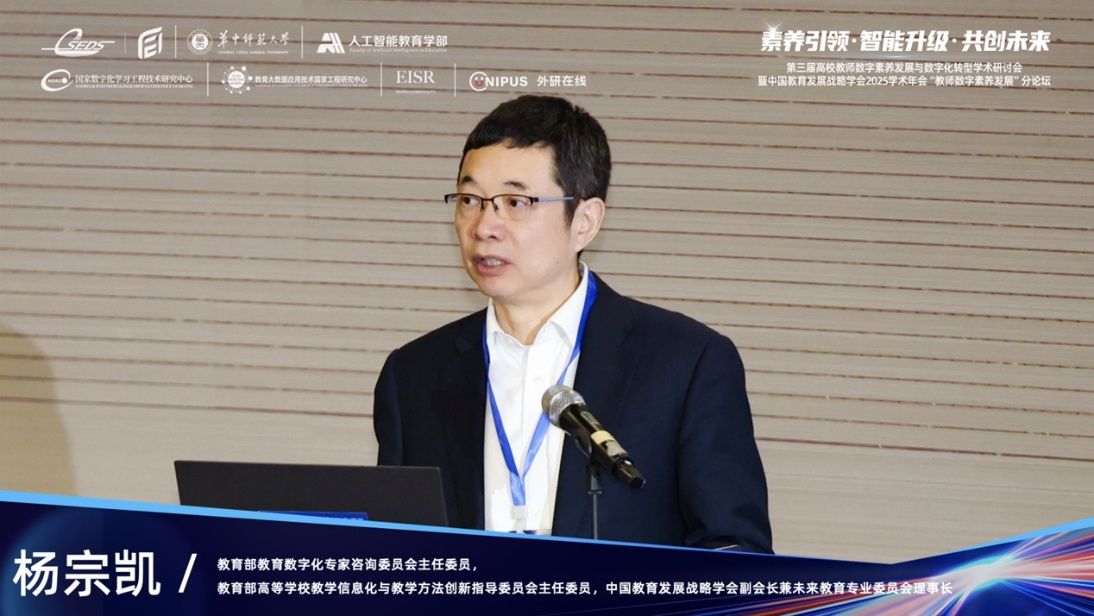
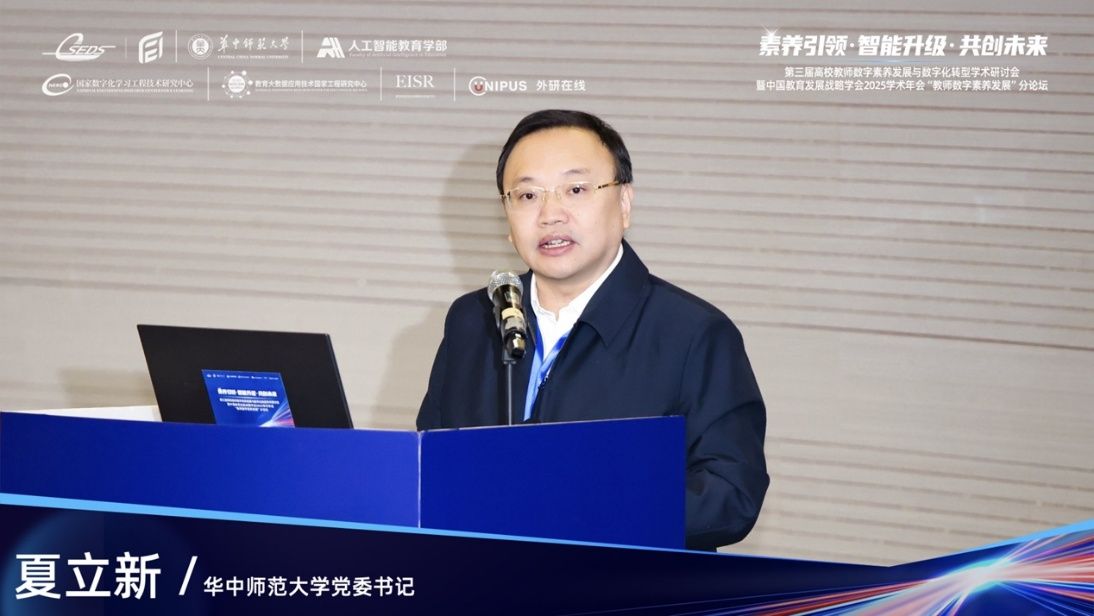
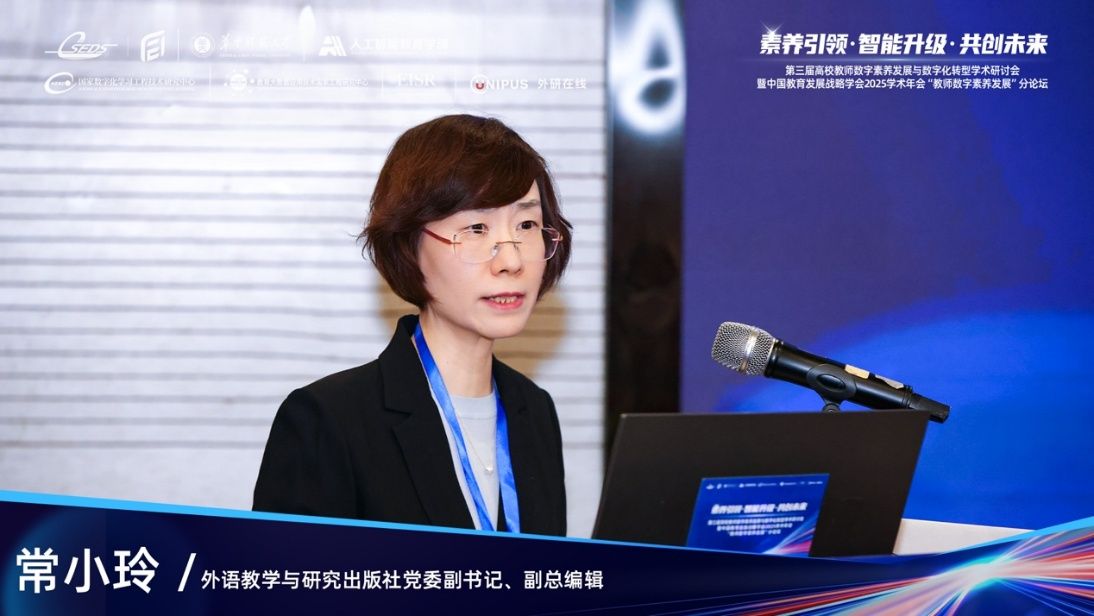
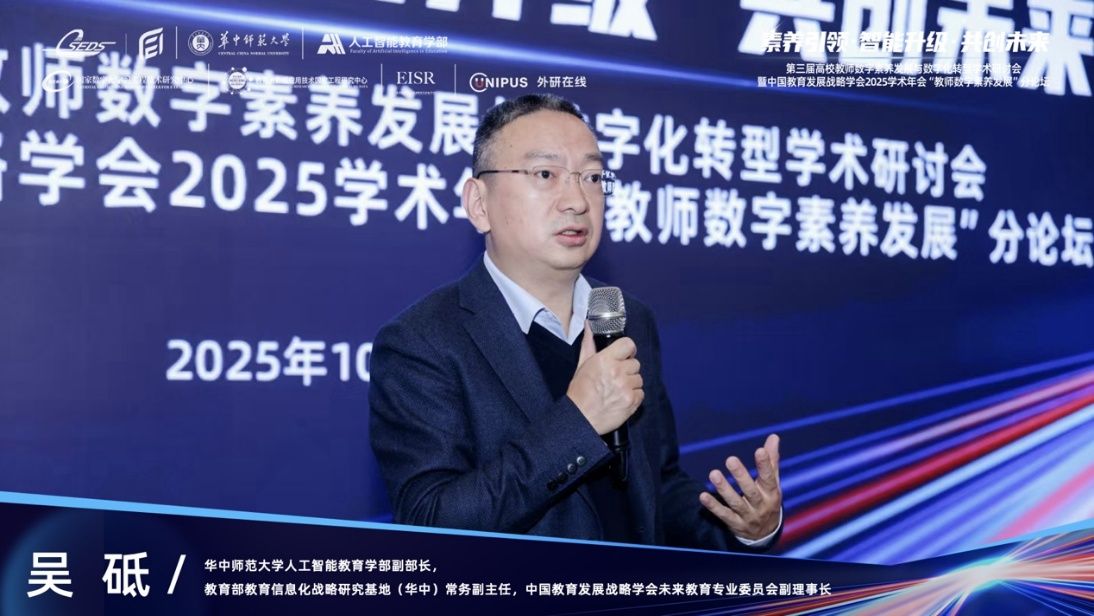
The opening remarks were delivered by Zongkai Yang, Director of Expert Advisory Committee on Education Digitalization of the Ministry of Education (EAC-ED-MOE) and the Guiding Committee for Teaching Informationization and Teaching Method Innovation of Higher Education Institutions under the Ministry of Education, and Vice Chairman of the Chinese Society of Educational Development Strategy (CSEDS). He particularly emphasized the importance of teacher role transformation and capacity enhancement. Lixin Xia, Secretary of the Party Committee of CCNU, shared three practical approaches adopted by the university in building faculty digital literacy. Following this, Xiaoling Chang from Foreign Language Teaching and Research Press (FLTRP) highlighted the necessity of enhancing digital literacy in supporting national strategies. The opening ceremony was chaired by Di Wu, Deputy Dean of the Faculty of Artificial Intelligence in Education at CCNU.
In a session themed on educational large models and teaching innovation, Hongfei Li, Vice President of CCNU, introduced practices in empowering teacher development throughout their career cycle with AI. Fengchun Miao from UNESCO interpreted the five dimensions of the Teacher AI Competency Framework via video. Liwen Li from Beijing Foreign Studies University shared pathways for AI-driven transformation in foreign language talent cultivation and teacher competency enhancement. Qingtang Liu from CCNU, Yi Liu from Wuhan University of Technology, and Huiqin Li from FLTRP together proposed innovative solutions from perspectives such as precision training, curriculum development, and paradigm evolution. This session was jointly chaired by Professor Di Wu and Yilei Jiang from Unipus.
Unipus, in collaboration with the Strategic Research Base for Digital Education (Central China), launched the “100-University Joint Assessment” initiative on digital literacy of university teachers. Yilei Jiang explained that the activity leverages the iTeach platform to provide higher education institutions with scientific data support in accordance with national standards.
Editors-in-chief, including Yuchao Jia from Distance Education in China, Lizhen Jiao from Modern Educational Technology, Jiasheng Hu from Technology Enhanced Foreign Language Education, Zhuo Wang from Shandong Foreign Language Teaching Journal, and Xiaoling Chang from Foreign Language Education in China, engaged in a discussion on the transformation of educational research paradigms in the intelligent era. The forum was moderated by Associate Professor Min Chen from CCNU.
Actual practices and explorations from various institutions were shared by Yanxi Deng from China University of Geosciences, Shi Chen from CCNU, Haiying Pan from Jilin University, and Lili Fan from Nanjing Normal University of Special Education. Their presentations covered innovative cases in areas, such as competition-driven teaching, knowledge graphs, AI literacy diagnostics, and digital transformation in special education. This session was chaired by Jian Xu, Deputy Director of CCNU.
Focusing on quality improvement, competency enhancement, and teaching innovation for university faculty in the intelligent era, the forum attracted more than 400 participants offline, including leaders and key faculty from universities across the country, as well as heads of the first cohort of faculty digital literacy demonstration base institutions. Together, they have actively explored new perspectives and pathways for improving faculty digital literacy in the current context of digital transformation.
Editor: Ruye LI
Reviewer: Xiaoxiao ZHU

 Home
Home phone
phone